
Cedar Fence Installation in Austin, TX
Naturally Rot-Resistant, Beautiful, and Built to Last in Central Texas
Request A Free Quote
Cedar is the most trusted wood for fencing in Austin, and we install more of it than any other material. At Horizon Fence Company, we’ve been installing cedar fences across Austin, TX since 2011 — long enough to know exactly how cedar performs in this climate, what installation details make the biggest difference, and how to build a fence that still looks right and stands straight a decade after we finish the job.
What makes cedar the right choice for Austin isn’t just aesthetics. It’s the combination of natural durability, dimensional stability in Austin’s wet-to-dry climate swings, and how well it holds stain and sealant when properly maintained. No chemical treatment required out of the gate, and no waiting period before it’s safe for pets and kids. Cedar goes in the ground and starts working immediately.
Whether you’re building a new backyard enclosure, replacing an aging pine fence with something that will last longer, or adding a cedar-lined perimeter to a larger property, we’ll build it right the first time. Request a free cedar fence estimate and we’ll schedule a site visit at your convenience.
Why Cedar Is Austin's Top Wood Fencing Choice
Austin homeowners and contractors have gravitated toward cedar as the default wood fencing material for good reasons that are specific to this climate. Here’s what sets cedar apart from the alternatives:
Natural Rot and Insect Resistance
Cedar contains natural oils — primarily thujaplicin — that inhibit the fungal growth and insect activity that break down other wood species over time. This is the core reason cedar outlasts pressure-treated pine in Austin when both are maintained consistently: the protection is built into the wood itself rather than applied externally. In a climate with Austin’s humidity swings and termite pressure, that matters considerably.
Dimensional Stability
Austin’s climate puts wood through significant stress. The soil swells and contracts with the seasons; so does wood fencing. Cedar is significantly more dimensionally stable than pine under these conditions — it warps, cups, and splits less, which means a cedar fence keeps its appearance and structural integrity longer in Austin’s heat and humidity cycle than most other wood species would.
Accepts Stain and Sealant Well
Cedar’s tight, straight grain accepts penetrating stain and UV sealant more uniformly than coarser-grained wood species. A properly stained cedar fence in Austin holds its color and moisture protection longer between applications, which reduces maintenance frequency and cost over the life of the fence. Our cedar fence staining and sealing service handles this for new installations and existing cedar fences that need a refresh.
No Chemical Treatment Required
Unlike pressure-treated pine, cedar doesn’t require chemical preservatives to achieve its rot resistance. This makes it the preferred choice for homeowners with young children or pets who use the yard regularly, and for properties near water features or rain gardens where chemical runoff from treated wood is a concern.
Appearance
Freshly installed cedar has a warm, reddish-honey tone that weathers to a silver-gray if left untreated, or holds its natural color with regular staining. Either finish looks intentional and fits Austin’s architectural character — from craftsman bungalows in central neighborhoods to Hill Country modern builds in the suburbs. It photographs well, adds genuine curb appeal, and is widely accepted by Austin-area HOAs without requiring special design approval.
Cedar Fence Styles We Install in Austin
Cedar works across every standard privacy and decorative fence style. Here are the configurations we install most often for Austin properties:

Cedar Dog Ear Privacy Fence
The most common configuration in Austin — 6-foot cedar boards with notched top corners installed edge-to-edge on three rails. Clean, consistent, and accepted by most HOAs without design review. This is the workhorse cedar fence that suits the majority of residential backyards across Central Texas.
Cedar Board-on-Board
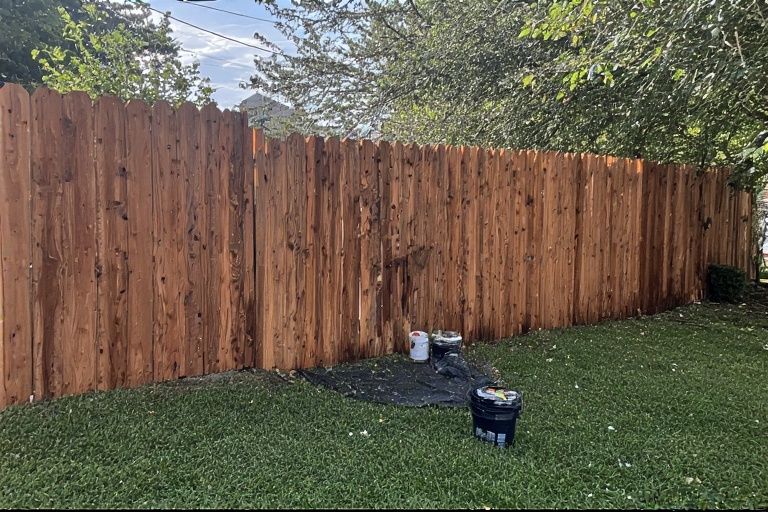
Boards overlap on alternating sides of the rail, providing full visual privacy with some airflow through the structure. This reduces wind load on the fence, extends post life in exposed locations, and gives both sides of the fence a finished look. For full details on how this style compares to solid board, see our privacy fence installation page.
Cedar Shadowbox
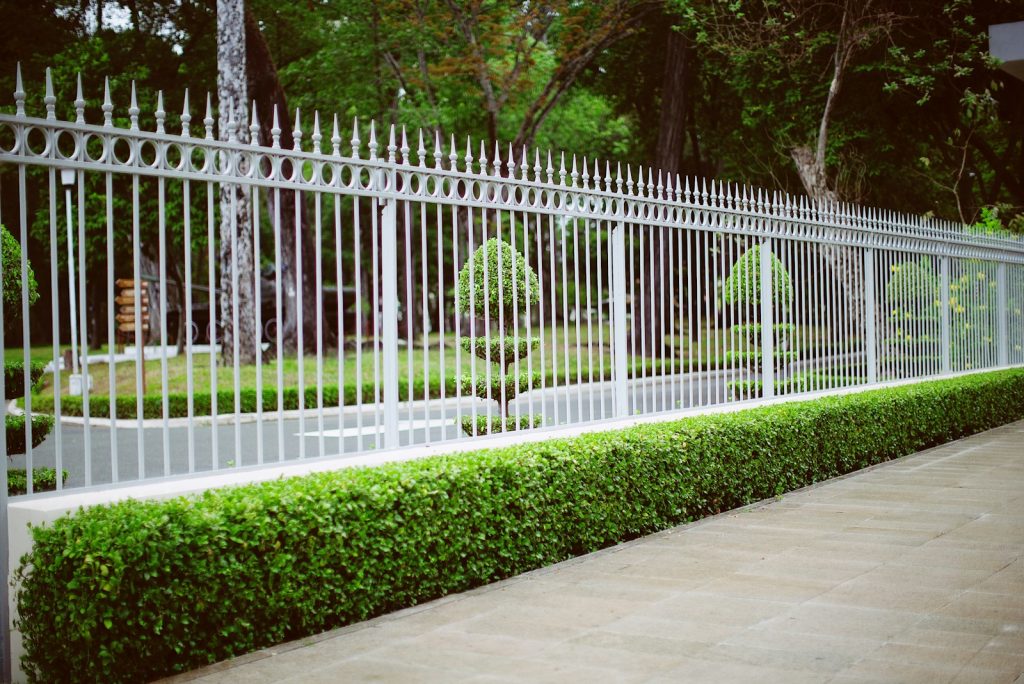
A more open version of board-on-board with wider spacing between alternating boards. It provides strong privacy at typical viewing angles while being noticeably more breathable — a good fit for long fence runs in wind-exposed yards or side yard applications where full solid fencing isn’t permitted at the front setback line.
Horizontal Cedar Fence
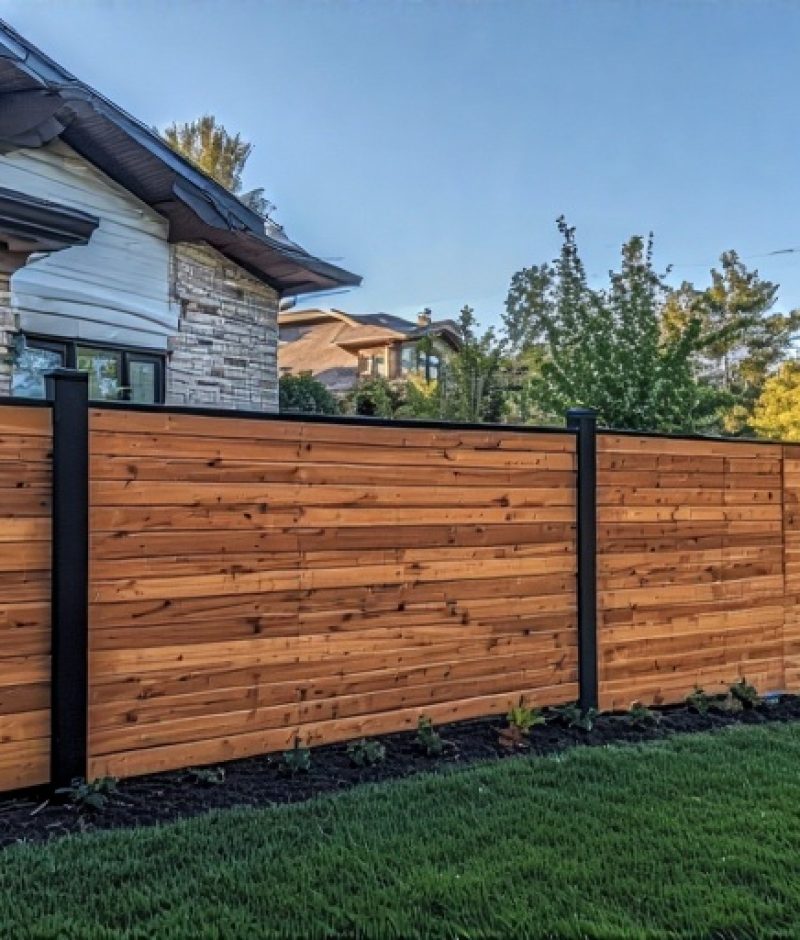
Horizontal board layouts have become increasingly popular in Austin’s design-forward neighborhoods. Cedar is ideal for this application because its dimensional stability minimizes the cupping and warping that can affect horizontal installations in climates with significant moisture variation. Horizontal cedar fencing is more labor-intensive to frame correctly than vertical styles, and we treat it as a custom build — quoted during your site visit with specific framing specifications for your lot conditions.
Cedar Picket Fence
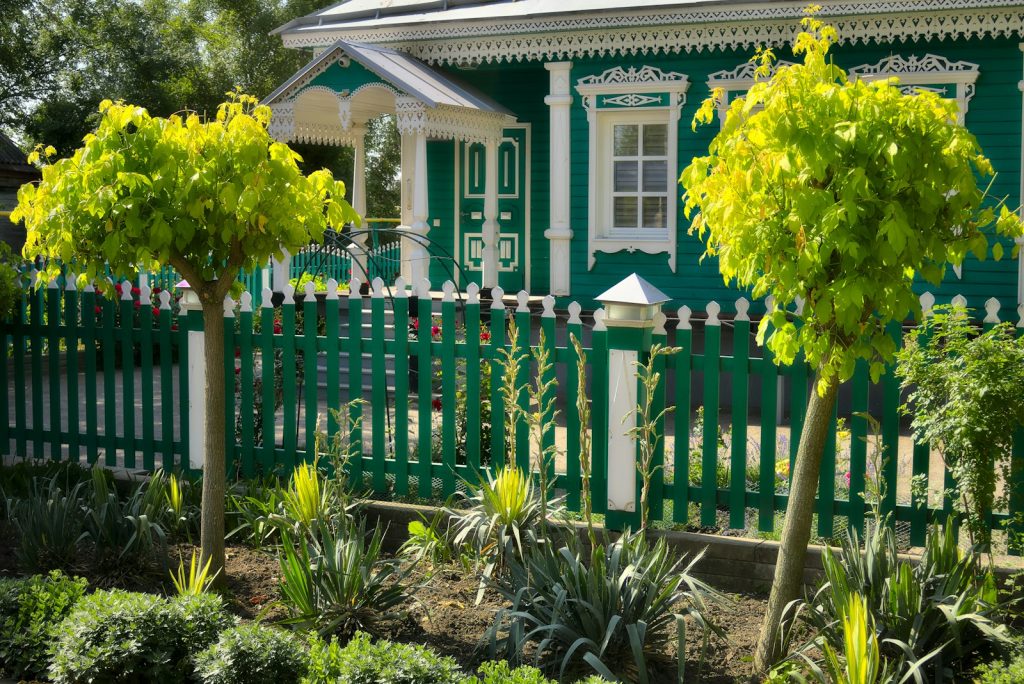
For front yard boundaries, garden borders, or decorative side yard applications where full privacy isn’t the goal, cedar picket fencing offers a traditional look with all of cedar’s durability advantages. We build both pointed and flat-top picket profiles with consistent spacing and properly set posts. See our wood fence installation page for the full range of open-style wood fence options we offer.
Our Cedar Fence Installation Process in Austin
Cedar is a premium material — it deserves a premium installation. Here’s how our Austin fence installation services team approaches every cedar project from first post to final gate latch.
Site Walkthrough and Planning
We visit every project in person before a single post goes in the ground. We measure the fence line, identify grade changes and soil conditions, confirm property line locations, check for underground utilities, and discuss gate placement, height, and any HOA constraints that apply to your address. Cedar fence permits are rarely required in Austin for standard residential heights, but we confirm the applicable rules before work begins. The City of Austin Development Services department publishes current permit thresholds for residential fencing.
Post Selection and Setting
We use cedar or pressure-treated pine posts depending on project specifications and homeowner preference. Post depth is set to at least one-third the total post length below grade, adjusted upward for Austin’s expansive clay soils and for fence heights above 6 feet. Bracing stays in place until the concrete has fully cured — we don’t pull stakes early to rush to the next phase.
Rail Installation
Three rails are standard for a 6-foot cedar privacy fence — top, middle, and bottom. Rails are installed level on flat terrain and appropriately adjusted for sloped runs, with grade transitions handled by stepping or racking the frame depending on degree of slope and fence style. All rail-to-post connections use galvanized hardware throughout.
Board Application
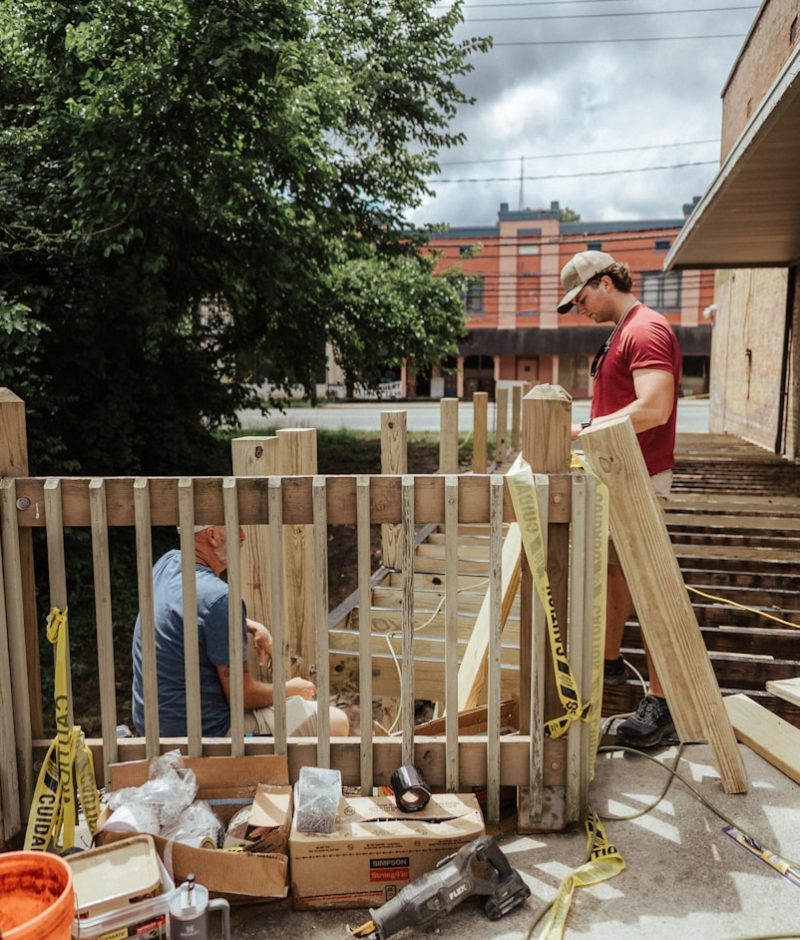
Cedar boards are sorted for consistency before installation — we pull out boards with significant knots, twist, or warp that would compromise the finished appearance or create gaps in a solid-board fence. Boards are installed plumb, with consistent spacing where applicable, and fastened with galvanized nails or screws. We check alignment continuously across the run, not just at the start and end.
Gates and Hardware
Cedar gates are framed with a diagonal brace running from the bottom hinge corner to the top latch corner — this is the single most important structural detail in any wood gate and the step most commonly skipped on budget installations. Hinges, latches, and drop rods are all rated for outdoor use in Austin’s weather. Every gate is hung and adjusted before we leave the job site.
Cedar Fence Maintenance in Austin
Cedar is the most forgiving wood fencing material in Austin, but it still benefits from consistent maintenance to reach its full service life. Here’s what we recommend:
- Apply a penetrating UV-protective stain or sealant within the first 6 to 12 months of installation — new cedar needs time to dry out fully before stain penetrates correctly, but don’t wait past the first year
- Reapply stain every two to three years, or when water stops beading on the wood surface and begins absorbing instead
- Keep soil, mulch, and vegetation clear of the fence board bases — ground contact is where rot starts, even in cedar
- Inspect annually for boards with significant checking (surface cracks) or splits that are opening — these accelerate moisture entry and should be replaced before neighboring boards are affected
- Check gate diagonal bracing every year or two — early correction of a sagging gate is far easier than rebuilding after the posts are affected
Our staining service covers new and existing cedar installations across Austin and the surrounding area. If sections of your cedar fence are damaged or deteriorating, our fence repair team handles board-by-board replacements and full-section rebuilds without requiring a full tear-out. And if your fence has reached the end of its useful life, we can quote a full cedar fence replacement during the same visit.
Cedar Fencing for Austin Homes and Businesses
We install cedar fences for homeowners, property managers, and business owners throughout Austin and the surrounding communities. Our Round Rock fence projects regularly include cedar privacy fencing for newer suburban developments, and our Cedar Park fence team handles cedar installations across that community’s growing residential neighborhoods — including projects subject to HOA design review in master-planned communities.
For homeowners, our residential cedar fencing page covers the full scope of what we offer for home installations across Central Texas.
For business owners and property managers, our team handles commercial cedar fence installations including multi-family property perimeters, equipment and utility screening, and commercial privacy enclosures that meet Austin’s screening ordinance requirements.
Frequently Asked Questions About Cedar Fence Installation in Austin
How long does a cedar fence last in Austin?
A well-installed cedar fence in Austin, properly stained within the first year and resealed every two to three years, typically lasts 15 to 20 years or more. Fences left unstained will gray and begin checking within a few years of installation and generally have shorter lifespans due to accelerated UV damage and moisture penetration.
Does cedar need to be treated before installation?
No. Cedar’s natural oils provide inherent rot and insect resistance without requiring chemical pre-treatment. However, we strongly recommend applying a UV-protective stain or sealant within the first 6 to 12 months after installation to preserve the wood’s appearance and extend its surface life under Austin’s intense sun.
How does cedar compare to pressure-treated pine in Austin?
Cedar is lighter, more dimensionally stable, and naturally rot-resistant without chemical treatment. Pine is denser, heavier, and less expensive upfront but requires consistent staining to perform comparably over time. In Austin’s climate, a consistently maintained cedar fence will typically outperform pine on appearance and structural integrity over a 15-plus-year lifespan.
Can I leave cedar unstained in Austin?
You can. Unstained cedar weathers to a silver-gray patina over time that some homeowners prefer. However, in Austin’s UV-intense environment, unprotected cedar checks and dries out significantly faster than in cooler climates, which can shorten the fence’s useful life. We recommend staining for maximum longevity, but unstained cedar is a legitimate choice if the weathered look suits your aesthetic.
How much does cedar fence installation cost in Austin?
Cedar fence cost varies by linear footage, fence height, style, terrain, and gate count. We provide free, itemized estimates for every project — contact us to schedule a site visit and we’ll walk you through your options with specific pricing.
What stain color works best on cedar in Austin?
Penetrating oil-based stains in cedar, redwood, or natural wood tones are the most popular choices for Austin homeowners — they complement the wood’s natural grain while providing UV protection. Semi-transparent stains allow the grain to show through; solid stains provide more complete UV coverage but obscure the wood character. We can make specific recommendations based on your home’s exterior palette and how much maintenance you want to commit to.
Do I need a permit for a cedar fence in Austin?
Most residential cedar fences at standard 6-foot height in rear and side yards don’t require a City of Austin permit, but rules vary by zoning, floodplain status, and proximity to rights-of-way. We confirm applicable requirements for your specific address before any work begins.
How do I know when my cedar fence needs replacing vs. repairing?
Individual board and rail damage — splits, rot at board bases, a sagging gate — is almost always repairable without replacing the entire fence. Post failure is the threshold: if more than a few posts are leaning due to rot at the base or soil heave, a full replacement is usually more cost-effective than repairing post by post. Our fence inspection service assesses every component and gives you an honest breakdown of what’s worth repairing and what’s reached the end of its useful life.
Get a Free Cedar Fence Estimate in Austin
Cedar fencing is one of the best investments you can make in an Austin backyard — it performs, it looks right, and it holds its value with straightforward maintenance. We’ve installed cedar fences across Austin and Central Texas for over 13 years, and we know what it takes to build one that lasts.
Learn more about our company and how we work on our about us page, or reach out today for a free, no-obligation site visit. As verified members of the American Fence Association, we hold our cedar fence installations to industry-verified standards. Our team is fully insured, experienced with Austin’s specific soil and climate challenges, and ready to talk through your project.