
Commercial Fence Installation in Austin, TX
Perimeter Security, Screening, and Access Control for Austin Businesses and Properties.
Request A Free Quote
Commercial fencing in Austin serves a different set of requirements than residential work — taller heights, heavier gauge materials, larger perimeters, stricter municipal screening ordinances, and the practical demands of properties that need to function reliably without frequent attention. At our Austin fence company, we’ve been handling commercial fence installation across Central Texas since 2011, working alongside property managers, general contractors, business owners, and multi-family developers on projects that range from single-building equipment enclosures to full perimeter installations on large commercial sites.
We understand what commercial clients need from a fence contractor: accurate scope, honest timelines, crew coordination that doesn’t disrupt active businesses, and a finished product that meets the city’s commercial screening requirements and holds up under the demands of a working property. We deliver all of it — fully insured, experienced with Austin’s commercial building codes, and ready to work around your operational schedule.
Whether you’re securing a new development, replacing aging perimeter fencing, or screening equipment and service areas to meet city ordinance, let’s talk through what your project needs. Request a free commercial fence estimate and we’ll schedule a site visit at your convenience.
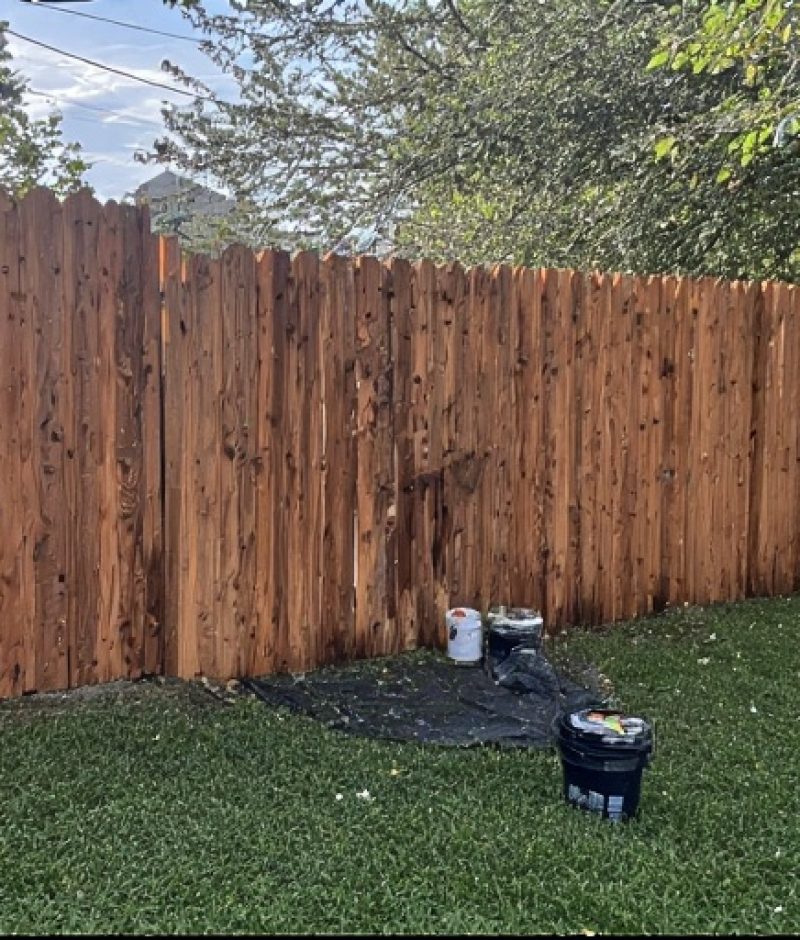
Commercial Fencing Applications We Handle in Austin
Commercial fencing projects in Austin fall into a few recurring categories. Each has different material requirements, height and gauge specifications, and city ordinance considerations. Here’s where we do most of our commercial work:

Perimeter Security Fencing
Securing the outer boundary of a commercial property — whether a retail strip, office campus, self-storage facility, auto dealership, or industrial yard — is the most common commercial fencing application we handle. Chain link at commercial gauge is the standard for utilitarian perimeters; ornamental iron or a combination of iron and masonry is used where aesthetics matter alongside security. Access points, sliding gates, and swing gates are designed for the traffic volume and operation type of each site.
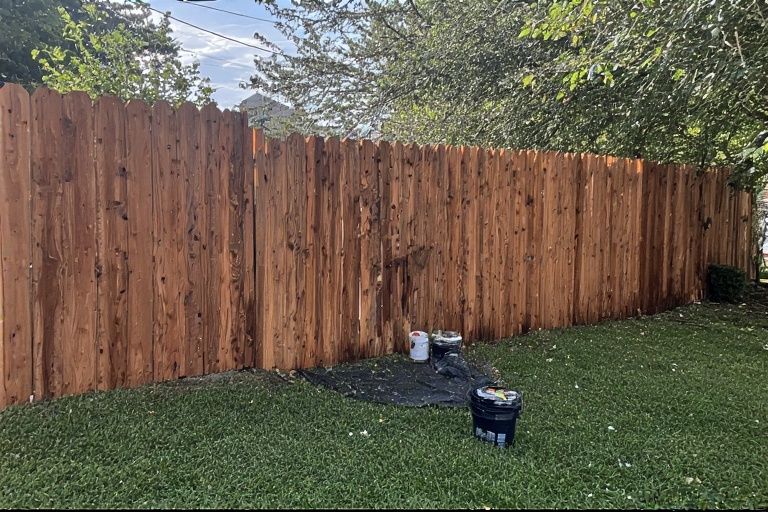
Equipment and Utility Screening
Austin’s commercial development code requires screening for mechanical equipment, HVAC systems, dumpster areas, utility boxes, and loading docks that are visible from public rights-of-way. Privacy fencing — typically wood, composite, or metal panel — installed at the required height and setback is the standard solution. We’re familiar with Austin’s commercial screening requirements and build enclosures that satisfy the ordinance without requiring multiple rounds of inspection revisions. Current requirements are published by the City of Austin Development Services department.
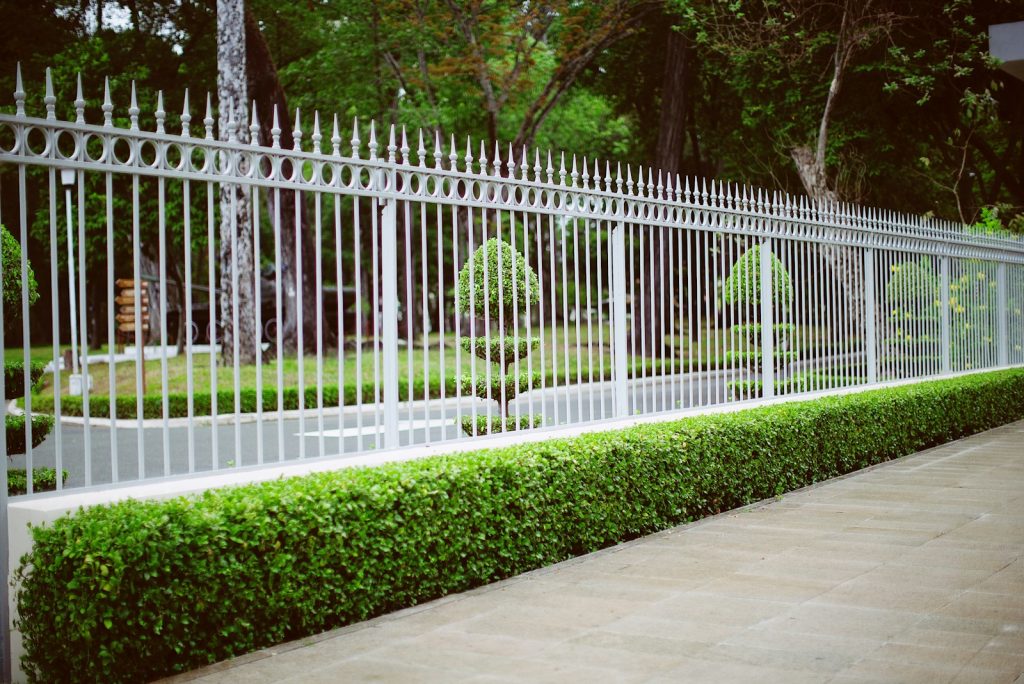
Multi-Family Property Fencing
Apartment complexes, townhome developments, and condo communities across Austin need perimeter fencing, pool enclosures, parking area boundaries, dumpster screens, and patio privacy barriers — often all on the same property. Multi-family fencing projects require coordination across multiple fence types and materials, and the installation schedule has to work around residents and active operations. We handle the full scope on these projects and are experienced with the coordination requirements of occupied properties.
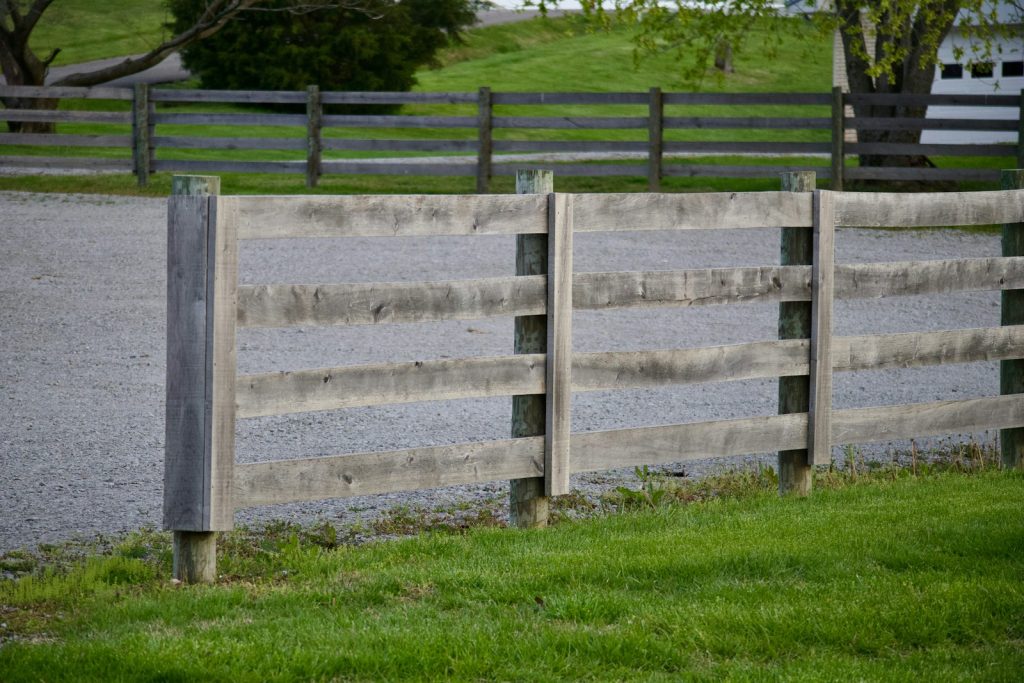
Dumpster and Trash Enclosures
Most Austin commercial properties are required to screen trash and recycling areas from public view. We build dumpster enclosures to the required height and solid-panel construction, typically in cedar, pressure-treated wood, composite, or metal panel depending on the property’s material requirements and the durability specification. Walk gates and wide swing gates are included for service access.

Construction Site Fencing
Temporary and semi-permanent chain link fencing for construction sites, staging areas, and equipment yards is a recurring commercial application across Austin’s active development landscape. We install and remove chain link perimeter fencing for construction projects on whatever schedule the site requires.
Pool Enclosures and Safety Fencing
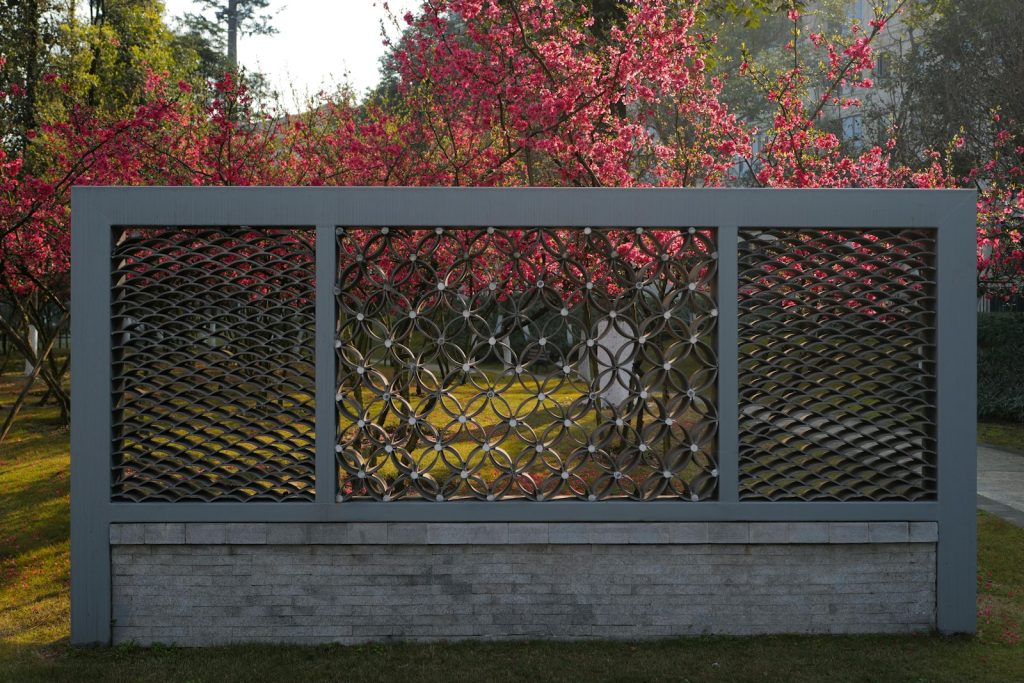
Commercial pool enclosures — apartment complexes, hotels, and multi-family developments — require fencing that meets Austin’s pool barrier code for height, latch placement, and self-closing gate hardware. Ornamental iron is the standard material for commercial pool enclosures because it satisfies code requirements, holds up without maintenance, and doesn’t obstruct sightlines for supervision. We build commercial pool enclosures to code on the first inspection.
Commercial Fence Materials We Install in Austin
The right material for a commercial fence depends on the application — what it needs to accomplish, what the site environment looks like, and what the budget and maintenance tolerance allow. Here’s how we match material to use case for commercial projects in Austin:
Commercial Chain Link
Chain link at commercial gauge is the most cost-effective perimeter solution for properties where security and visibility matter more than aesthetics. Heavier post spacing, larger diameter posts, and commercial-grade tension bars and fittings distinguish a proper commercial chain link installation from the residential product. Galvanized and vinyl-coated options are available; top rail, barbed wire, and privacy slat configurations are all common additions on commercial sites. See our commercial chain link fencing page for the full breakdown of gauge, mesh, and gate options.
Ornamental Iron and Aluminum
Ornamental iron is the preferred material for commercial properties where security matters but curb appeal is equally important — retail fronts, office campuses, mixed-use developments, medical facilities, and upscale multi-family properties. Powder-coated aluminum is an alternative to iron that eliminates rust risk on properties near water features or in high-moisture microclimates. Our commercial ornamental iron page covers profile options, finish selection, and custom fabrication for commercial specifications.
Commercial Privacy and Screening Fencing
Solid-board wood, composite panel, and metal screening fencing are all used for equipment screening, dumpster enclosures, and service area privacy on Austin commercial properties. The right material depends on the aesthetic requirement, the durability specification, and how much maintenance the property management team can commit to over the long term. Our commercial privacy fencing page covers height, construction, and material options for full-panel screening applications.
Composite Fencing for Commercial Properties
Composite is the lowest-maintenance solid-panel option for commercial properties that need screening enclosures to look good over a long service life with minimal upkeep. No staining, no painting, no UV bleaching — composite holds its color and resists the rot and moisture damage that affects wood screening enclosures in Austin’s climate. For properties where maintenance budget is limited and appearance standards are ongoing, our composite fencing page covers the full performance and cost comparison.
Cedar and Wood Fencing for Commercial Properties
Cedar and pressure-treated pine remain practical choices for commercial screening and dumpster enclosures where appearance is important but budget is constrained. A properly installed wood enclosure on a commercial property performs reliably with periodic staining and board replacement. Our cedar fencing page and commercial wood fencing page both cover construction standards and maintenance expectations for these materials in Austin’s climate.
Our Commercial Fence Installation Process in Austin
Commercial fence projects require more coordination upfront than residential work — active properties, adjacent tenants, city permitting, and larger crews all need to be managed together. Here’s how our commercial fence installation team handles a commercial project from first contact to completed installation.
Site Assessment and Scope Development
We visit every commercial project in person before quoting. We measure the full fence perimeter, assess terrain and soil conditions, identify underground utilities, review access point requirements, and confirm screening or security specifications against the applicable city code. For new construction projects, we coordinate with the general contractor on sequencing and schedule. We don’t quote commercial jobs remotely — an on-site assessment is the only way to develop an accurate scope on a commercial property.
Permitting
Commercial fence installations in Austin more commonly require permits than residential work — particularly at heights above 8 feet, on properties near rights-of-way, or when fencing is part of a broader development permit. We’ll identify the permit requirement during the site assessment and advise you on the submission process. On permitted projects, we coordinate with the city inspection schedule to keep the installation on track.
Post Sizing and Foundation
Commercial fence post specifications are heavier than residential — larger diameter, deeper footings, and closer spacing on perimeter runs, with additional specifications for gate posts that carry the load of sliding or double-swing access gates. We size posts and footings for the fence height, panel weight, wind load, and soil conditions at each specific site. Austin’s expansive clay and limestone substrate require the same careful approach at commercial scale as on residential properties — post foundation failure is post foundation failure regardless of the project type.
Panel, Rail, and Gate Installation
Commercial panel and rail installation is executed to specification — consistent heights, plumb posts, proper tension on chain link runs, and hardware rated for the volume of use the site requires. Drive gates — sliding cantilever gates, dual swing gates, and roll gates — are engineered and hung for the opening width and vehicle traffic frequency of each access point. Every gate is tested and adjusted before the job is complete.
Coordination and Site Management
On active commercial properties, we manage our work around the property’s operating schedule — limiting disruption to tenants, deliveries, and daily traffic flows. Staging areas are kept clean and contained. We communicate proactively with property managers and general contractors on progress and schedule changes. The site is cleared of all materials, debris, and equipment before we call the job complete.
Commercial Fence Maintenance in Austin
Commercial fences take more wear than residential installations — vehicle contact, vandalism, delivery traffic, and heavier use of gates and access points all accelerate wear on specific components. Here’s what we recommend for keeping a commercial fence functioning and compliant over its service life:
- Schedule a professional fence inspection annually on commercial properties — gate hardware, post connections, and panel fasteners all wear faster under commercial conditions than residential use
- Inspect gate rollers, hinges, latches, and drop rods every six months on high-traffic access points — these are the first failure points and the easiest to address before they become operational problems
- For wood and cedar screening enclosures, apply wood fence staining every two to three years to protect against Austin’s UV intensity and prevent premature board deterioration
- Clear vegetation, soil, and debris from fence bases and post footings — ground contact and organic buildup at post bases accelerates deterioration in Austin’s moisture-heavy soil
- Document any vehicle or equipment impact damage promptly — impact-damaged posts and panels compromise the fence line’s structural integrity and, on secured perimeters, its security function
Our scheduled fence inspections cover every post, panel, gate, hardware component, and foundation connection on commercial properties with a written report and itemized recommendations. When sections need repair, our commercial fence repair team handles everything from gate adjustments and hardware replacement to panel and post section rebuilds. For properties where the existing fence has reached end of life, we provide commercial fence replacement scoped and priced for full commercial perimeters.
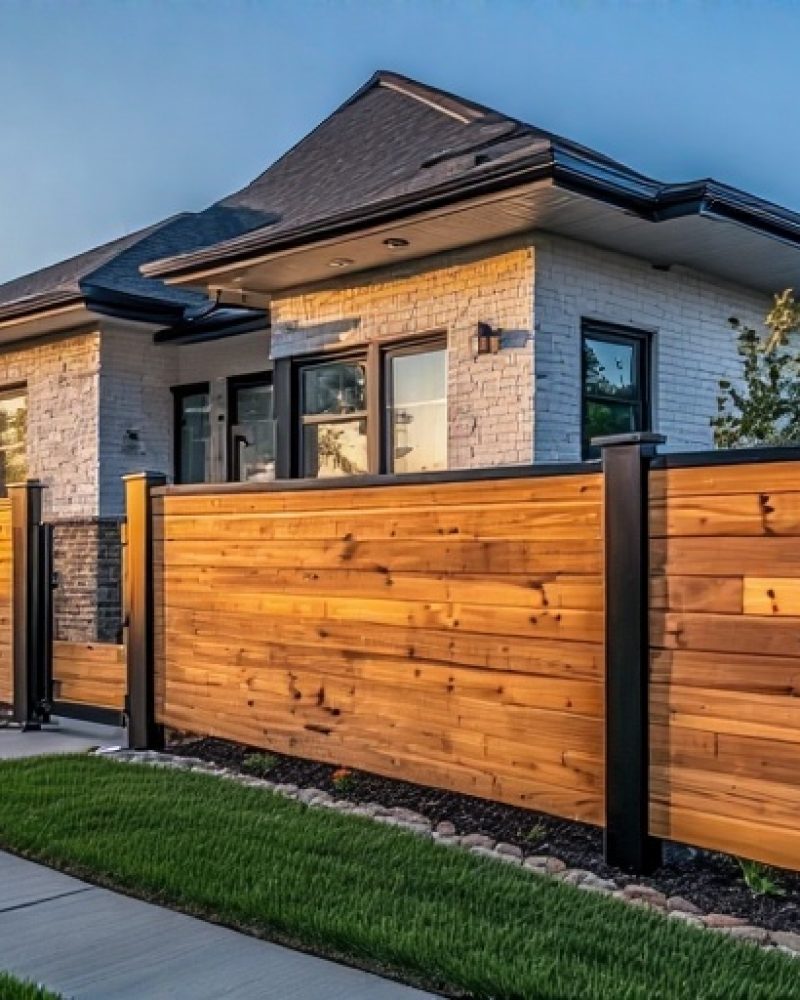
Why Austin Businesses Choose Horizon Fence Company
Commercial fence clients need a contractor they can trust to deliver accurate scope, a clean installation, and a product that performs without requiring repeated service calls. We’ve been doing commercial fence work across Austin since 2011 and we operate with the professionalism that active business environments require. As verified members of the American Fence Association, every installation we complete is held to industry-verified standards. Learn more about us and our history in Austin on our about page. Here’s what our commercial clients consistently rely on:
- Fully insured with over 13 years of commercial fence installation experience in Central Texas
- Accurate, itemized estimates — no ballpark quotes, no scope surprises after the project starts
- Post sizing, footing depth, and concrete specifications matched to commercial loads and Austin’s soil conditions
- Coordination with property managers, GCs, and city inspection schedules on permitted projects
- Gate engineering built for commercial traffic volume — not residential hardware at commercial scale
- Clean job sites and active-property-friendly installation scheduling
- Written inspection reports and itemized maintenance recommendations for ongoing property management
Frequently Asked Questions About Commercial Fence Installation in Austin
Do commercial fences in Austin require a permit?
Commercial fence installations in Austin more frequently require permits than residential work, particularly at heights above 8 feet, on properties subject to site plan review, or where fencing is part of a broader development or screening compliance requirement. We identify the applicable permit requirement during the site assessment and advise you on the process. Current permit thresholds are published by the City of Austin Development Services department.
What type of fence is best for commercial security in Austin?
Chain link at commercial gauge is the most cost-effective solution for perimeter security where aesthetics are secondary. Ornamental iron or powder-coated aluminum provides comparable security with significantly better visual impact — preferred for retail, office, and mixed-use properties where the fence line is visible to customers and the public. The right choice depends on the security specification, the aesthetic requirement, and the long-term maintenance budget for the property.
How does commercial fence installation differ from residential?
Commercial installations use heavier post diameters, deeper footings, and tighter post spacing than residential work. Gate hardware is engineered for higher traffic volume. Permitting requirements are more common. The installation schedule has to account for active operations on the property. And the scope — perimeter footage, number of access points, screening enclosure count — is typically larger and more complex than a residential project.
Can you install fencing on an occupied commercial property without disrupting operations?
Yes. We’re experienced working on active commercial properties — apartment complexes, retail centers, and business campuses with ongoing tenant and customer traffic. We manage staging areas, work around operational hours where needed, and communicate proactively with property management on daily progress. A pre-installation coordination call is standard on any commercial project with active operations.
What are Austin's requirements for commercial equipment and dumpster screening?
Austin’s commercial development standards require that mechanical equipment, HVAC systems, dumpster areas, and utility infrastructure visible from public rights-of-way be screened to the full height of the equipment being screened, typically a minimum of 6 feet. Specific setback, material, and opening requirements vary by zoning district and development type. We’re familiar with these requirements and build screening enclosures that pass inspection on the first review.
How long does commercial fence installation take in Austin?
Timeline depends on scope — perimeter footage, number of access gates, material type, and permitting requirements. A straightforward chain link perimeter on a commercial lot can be completed in two to three days. Larger perimeters, permitted projects waiting on city inspection, or multi-phase installations on active properties will take longer. We provide a detailed schedule during the estimate process based on your specific site and project requirements.
Do you handle commercial fence repair and maintenance, not just new installations?
Yes. We handle commercial fence repair and ongoing maintenance across Austin — gate adjustments, hardware replacement, post and panel section rebuilds, and storm damage repairs. Annual inspection contracts for commercial properties are available. Proactive maintenance on a commercial fence is almost always less expensive than emergency repair after a failure, and it keeps the property in continuous compliance with any applicable screening or security requirements.
Can Horizon Fence Company work with general contractors on new commercial construction?
Yes. We work as a fence subcontractor on new commercial construction projects across Austin — coordinating scope, sequencing, and schedule with the GC on both temporary construction site fencing and permanent perimeter and screening fence installation. We carry the required insurance documentation for subcontractor work and are familiar with the coordination requirements of active construction sites.
Get a Free Commercial Fence Estimate in Austin
From single-building equipment enclosures to full perimeter installations on large commercial sites, Horizon Fence Company has the experience, equipment, and commercial-scale capacity to handle your project. We offer free, no-obligation on-site estimates for every commercial fence project across Austin and Central Texas.
Our team is fully insured, experienced with Austin’s commercial building and screening codes, and built to deliver the accuracy, coordination, and professionalism that commercial clients require. Reach out today and let’s talk through your project.