
Composite Fence Installation in Austin, TX
The Lowest-Maintenance Fence You Can Build in Central Texas
Request A Free Quote
Composite fencing gives Austin homeowners something wood can’t deliver without significant ongoing effort: a fence that holds its color, resists rot and insects, and doesn’t require staining, sealing, or annual maintenance to stay looking good. At Horizon Fence Company, we’ve been installing composite fences across Austin, TX since 2011, and we’ve watched this material outperform wood on appearance and structural integrity in Central Texas’s punishing climate year after year.
The appeal is straightforward. Austin’s combination of intense UV exposure, heavy clay soils, humidity swings, and hot dry summers accelerates the wear cycle on untreated wood faster than most homeowners expect. Composite fencing is engineered specifically to resist those forces — the same properties that break down cedar and pine over time have minimal effect on a well-manufactured composite product.
If you’re replacing an aging wood fence and don’t want to repeat the same maintenance cycle in another decade, composite is worth a serious look. Request a free composite fence estimate and we’ll walk your property and go over the options.
What Is Composite Fencing?
Composite fencing is manufactured from a blend of recycled wood fiber and plastic polymers — typically polyethylene or PVC. The resulting boards look like wood but behave like plastic in the ways that matter most for outdoor performance: they don’t absorb moisture, they don’t provide food for rot organisms or insects, and they don’t check or split under UV exposure the way natural wood does.
The wood fiber component gives composite boards their visual character — grain texture, warm tones, and a surface that reads as natural rather than synthetic from typical viewing distances. The polymer binder is what delivers the durability. Modern composite fencing products have evolved considerably from early generations that faded unevenly or became brittle in extreme heat. Quality composite boards today carry UV inhibitors built into the material rather than applied to the surface, which means the color protection doesn’t wear off the way a topical stain does on wood.
Composite is not maintenance-free — posts still need to be properly set, hardware still needs occasional inspection, and the fence line still needs to be kept clear of soil and vegetation buildup. But the maintenance burden is fundamentally lower than any wood product in Austin’s climate, and the service life is typically longer.
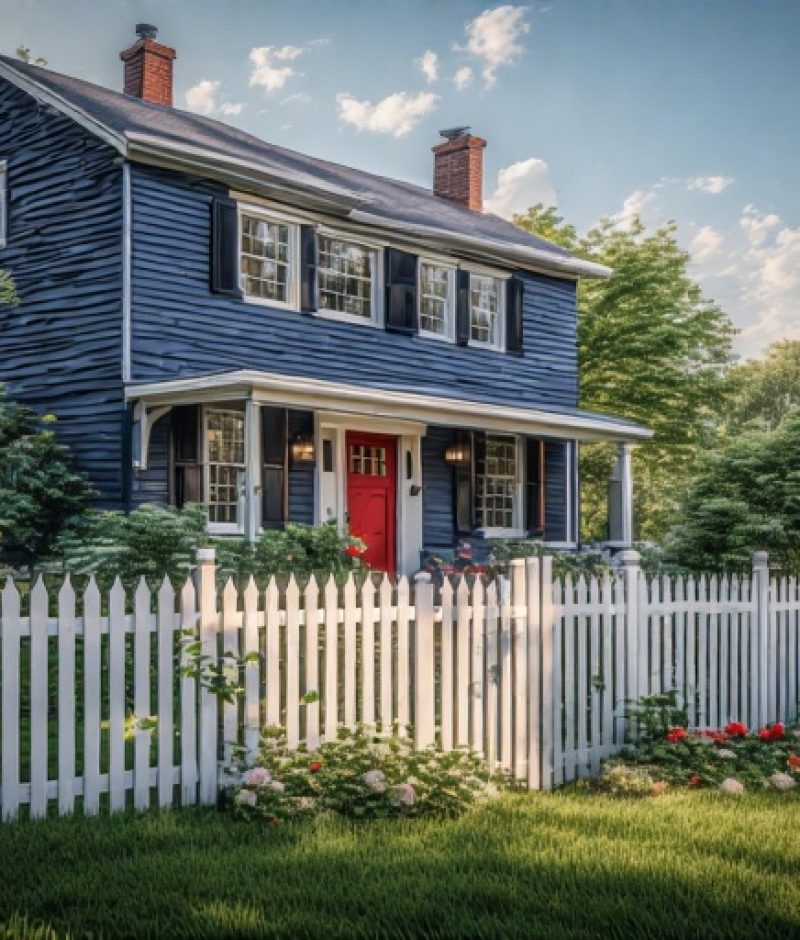
Why Composite Fencing Performs Well in Austin's Climate
Central Texas is one of the more demanding environments for outdoor building materials anywhere in the country. Here’s why composite holds up where wood struggles:
UV Resistance
Austin averages well over 200 sunny days per year, and summer UV index readings are among the highest in the continental United States. UV radiation is the primary driver of color fade, surface checking, and structural degradation in wood fencing. Quality composite boards contain UV stabilizers throughout the board cross-section, not just on the surface — so they don’t fade unevenly, don’t need UV-protective coatings reapplied, and don’t develop the bleached-gray appearance that unprotected wood shows within two to three Austin summers.
Moisture and Rot Resistance
Composite boards don’t absorb water. This single property eliminates the rot, mold, and mildew pathways that shorten wood fence life in Austin’s wet seasons. Board bases that contact soil or mulch — the most vulnerable point in any wood fence — don’t wick moisture into the board material the way cedar or pine does. This is particularly relevant in Austin’s black clay soils, which hold moisture at the surface for extended periods after rain.
Insect Resistance
Termite and carpenter ant pressure in Central Texas is real. Wood fences — especially pressure-treated pine without consistent chemical maintenance — are susceptible over time, particularly at ground contact points and gate posts where moisture concentrates. Composite boards provide no food source for wood-boring insects, which removes one of the more expensive failure modes for wood fencing in this region.
Dimensional Stability
Austin’s clay soils expand and contract dramatically with seasonal moisture changes, and wood fencing responds to those forces by warping, cupping, and splitting. Composite boards are significantly more dimensionally stable — they don’t absorb the moisture that drives those changes, so they hold their shape and alignment over Austin’s wet winters and dry summers more consistently than wood.
Composite Fence Styles We Install in Austin
Composite fencing is available in styles that closely mimic the most popular wood privacy fence configurations. Here are the options we install most often for Austin properties:

Composite Privacy Fence
The most common composite application — solid-board panels installed edge to edge on a metal or composite post system at 6-foot height. The result is visually identical to a wood privacy fence from street distance, with none of the maintenance overhead. For homeowners who want full backyard seclusion without the upkeep of a wood fence, this is the primary use case. See our privacy fence installation page for a full breakdown of privacy fence construction styles and how composite compares to wood in that application.
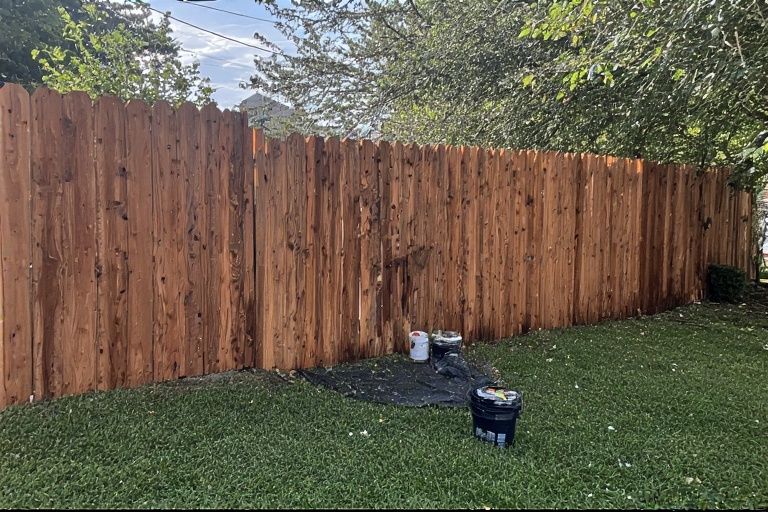
Composite Board-on-Board
Alternating boards on each side of the rail, providing full privacy with some airflow through the structure. The wind-load advantages of board-on-board construction apply equally to composite panels — this style is a strong choice for exposed yard locations and larger perimeters where straight-line wind resistance is a design consideration.
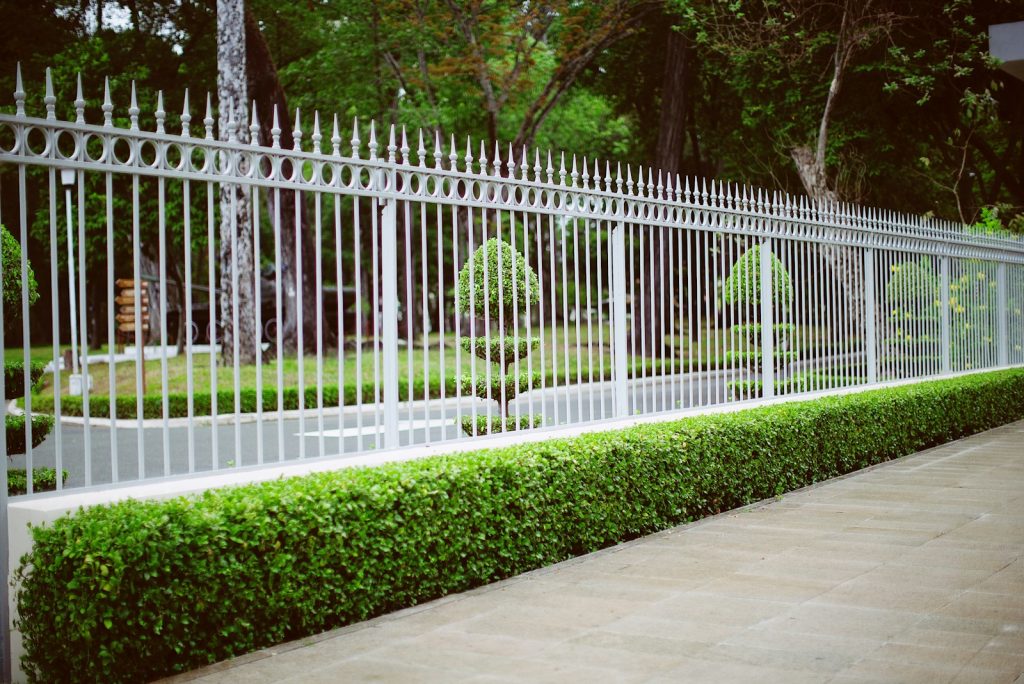
Horizontal Composite Fence
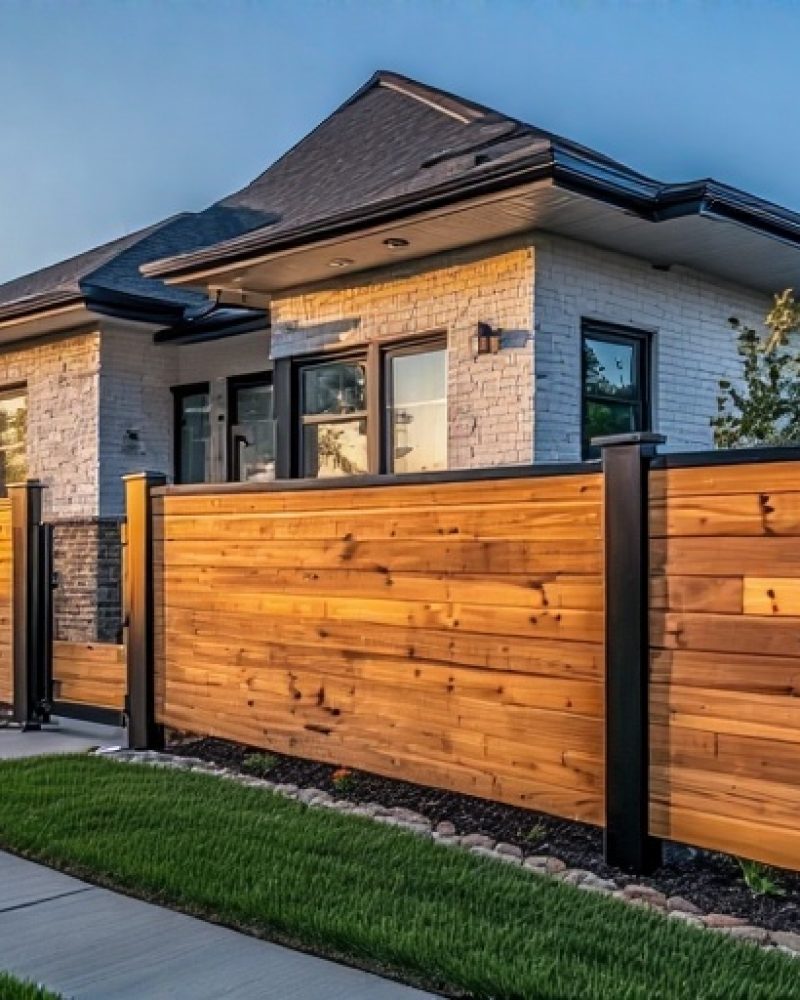
Horizontal board layouts work particularly well with composite because the material’s dimensional stability minimizes the warping and cupping that can affect horizontal wood installations over time. Composite horizontal fencing has become a popular choice for contemporary and Hill Country modern Austin homes — it’s cleaner, more architectural, and more durable in this configuration than natural wood.
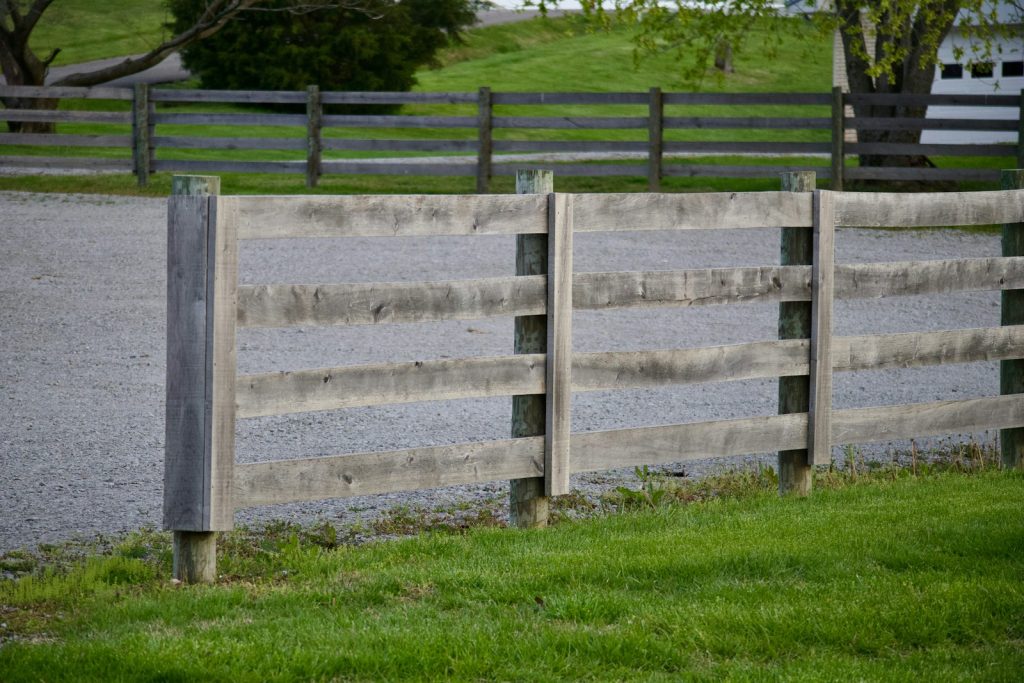
Composite vs. Wood: Choosing the Right Material
Composite costs more upfront than cedar or pressure-treated pine. That’s the honest starting point for any material comparison. The calculation changes when you factor in the maintenance cycle: cedar and pine require staining every two to three years in Austin’s climate, and our fence staining service gets called regularly on aging wood fences that weren’t kept up. Composite eliminates that recurring cost and typically lasts 25 years or more versus 12 to 20 for a well-maintained wood fence. For homeowners planning to stay in their property long term, the total cost of ownership often favors composite despite the higher initial investment. See our wood fence installation page and cedar fence installation page for detailed breakdowns of both wood options if you’re still weighing the decision.
Our Composite Fence Installation Process in Austin
Composite fencing uses a different installation method than traditional wood framing in many panel systems — posts are often steel or aluminum rather than wood, and boards slot into a post channel rather than being face-nailed to a rail. Getting the installation right requires experience with the specific system being used. Our professional fence installation team is trained on the composite panel systems we carry, and we apply the same post-depth and concrete standards we use on every fence type regardless of the material above grade.
Site Assessment and Planning
We begin with an on-site visit to measure the fence line, assess terrain and soil conditions, confirm property line positioning, check for underground utilities, and review any HOA or city requirements that apply to your address. Austin’s permit thresholds for composite fencing follow the same rules as wood — most residential installations at 6 feet don’t require a permit, but we verify this for your specific address. Current fence permit requirements are published by the City of Austin Development Services department.
Post Setting
Post foundation is where composite fence longevity is determined — not in the boards. We set posts to correct depth for Austin’s expansive clay soils, use the right concrete mix for the load and soil type, and allow full cure time before loading the frame with panels. Steel and aluminum posts used in composite systems are sized and spaced per the manufacturer’s installation specifications, which we follow without shortcutting span distances.
Panel and Board Installation
Composite panels are installed level, plumb, and at consistent height across the full fence run. On sloped lots, we step the fence in clean increments matched to the panel module sizing — composite systems generally don’t rack the way wood framing does, so slope transitions require careful planning during layout. All panel connections are made per manufacturer specifications with appropriate fasteners and expansion gaps where required to allow for thermal movement.
Gates
Gates for composite fences are typically framed in steel or aluminum to match the post system. We build walk gates and double drive gates with the same diagonal bracing standard we apply to wood gates — sag prevention is equally important regardless of material. Gate hardware is powder-coated or stainless steel throughout to match the low-maintenance profile of the composite fence itself.
Final Inspection and Cleanup
We walk the completed fence with you before calling the job done — every panel, post, and gate gets checked for alignment, hardware function, and secure fastening. The job site is fully cleared of all material packaging, scrap, and debris before we leave.
Composite Fencing for Austin Homes and Businesses
We install composite fences for homeowners, property managers, and commercial clients throughout Austin and the surrounding area, including Leander fence installations where newer master-planned communities frequently specify low-maintenance fencing materials in their HOA design standards.
For homeowners, our residential composite fencing coverage explains how we approach home fencing projects across Central Texas and what to expect from the estimate to installation process. [PENDING — activate when Page 7 is live]
For commercial properties, commercial composite fence installations are particularly well-suited for multi-family developments, office campuses, and retail properties where appearance standards are high and maintenance budgets are limited. Composite’s consistent color and resistance to the graffiti adhesion that affects rough wood surfaces make it a practical choice for visible commercial perimeters.
Composite Fence Maintenance in Austin
Composite fencing is the lowest-maintenance option we install, but it’s not zero-maintenance. Here’s what we recommend to keep a composite fence performing and looking its best in Austin’s climate:
- Rinse panels with a garden hose once or twice a year to remove dust, pollen, and surface grime — this is typically the extent of routine maintenance required
- For any organic staining from mold or algae — more common in shaded or low-airflow sections — a mild composite deck cleaner and soft brush removes it without damaging the surface; avoid pressure washing at high settings, which can erode the board surface texture
- Keep soil, mulch, and vegetation clear of the base of composite boards — while composite doesn’t rot, organic material buildup at the base can trap moisture against post footings and hardware connections
- Inspect post connections and hardware annually — the boards will outlast the hardware in most composite fence systems, and early hardware replacement is far easier than structural repair later
- Check gate hinges and latch alignment once a year — composite gate frames don’t sag the way wood frames do, but hardware loosening from use is still a normal maintenance item
If individual boards or posts are damaged — whether from vehicle impact, storm debris, or hardware failure — our fence repair specialists can assess whether section replacement or full-panel swap is the right approach. For fences that have reached the end of their useful life, our team handles full composite fence replacement from tear-out through new installation. And for an annual assessment of any fence type, our professional fence inspection service covers every post, panel, gate, and hardware component with a written summary.
Frequently Asked Questions About Composite Fence Installation in Austin
How long does composite fencing last in Austin?
Quality composite fencing typically carries a manufacturer warranty of 25 years or more, and real-world performance in Austin’s climate generally supports that range for boards and panels. Post and hardware life depends more on installation quality and site conditions than on the composite material itself. A properly installed composite fence with steel posts and powder-coated hardware will routinely outlast two generations of wood fence on the same property.
Does composite fencing look like real wood?
Modern composite fencing with embossed woodgrain texture reads convincingly as wood at typical viewing distances — from the street, from a neighboring yard, and in most photography. Up close, the texture is more uniform than natural wood grain. Whether this matters depends on your aesthetic priorities. Most Austin homeowners find it a satisfactory trade for the performance benefits composite delivers.
Is composite fencing worth the extra cost over cedar in Austin?
The upfront cost premium for composite over cedar is real — typically 30 to 60 percent more per linear foot depending on the product and installation specifics. Over a 20-plus-year ownership period, that gap narrows significantly when you account for cedar’s staining, sealing, and board replacement costs in Austin’s climate. For homeowners planning to stay in their property long term, composite often wins on total cost of ownership. For shorter time horizons, cedar remains a strong choice — we cover that material comparison in detail on the cedar fence installation page.
Can composite fencing be installed on a sloped yard in Austin?
Yes, with stepped transitions rather than racking. Most composite panel systems are designed for level installation in modular sections that step down in increments to follow grade changes. We plan the step layout during the site assessment so slope transitions are clean and consistent. Rocky Austin terrain and caliche substrate are handled the same way as with any fence type — we auger to the required depth regardless of soil resistance.
Does composite fencing require HOA approval in Austin?
Most Austin-area HOAs that govern fence materials and appearance will review composite products as part of the standard approval process. We’ve installed composite fences in a number of master-planned communities across Central Texas and are familiar with the documentation and sample requirements most HOAs request. We’ll advise you on the approval process during your estimate if HOA review applies to your address.
How do I clean a composite fence?
Routine maintenance is a once-or-twice-yearly rinse with a garden hose. For organic staining from mold or algae in shaded sections, a composite-specific deck cleaner and soft brush removes it without damage. Avoid high-pressure washing settings, which can erode the embossed surface texture over time. No staining, sealing, or painting is ever required.
What colors and finishes are available in composite fencing?
We stock and source composite fence boards in a range of woodgrain colors — typically spanning natural cedar tones, warm browns, and darker charcoal or gray profiles. Availability varies by product line and lead time. During your estimate consultation we’ll show you current samples and order lead times for your preferred color and profile.
What happens if one composite fence board is damaged?
Most composite fence systems allow individual board replacement without disturbing the surrounding panels. The replacement board needs to match the original product line to fit the post channel correctly. If the product has been discontinued, we assess whether a close-match substitution works visually or whether a section replacement is the better option. Our fence repair specialists handle composite board and panel replacements across Austin and the surrounding communities.
Get a Free Composite Fence Estimate in Austin
If you’re ready to stop repeating the stain-and-repair cycle on a wood fence and want something that genuinely holds up in Austin’s climate with minimal upkeep, composite fencing is worth the conversation. We offer free, no-obligation site visits for every project — no pressure, no sales pitch, just an honest assessment of your options and what each will cost.
Learn more about how we operate and our history in Austin on our about our company page. As verified members of the American Fence Association, we hold every installation — composite, wood, or otherwise — to industry-verified standards. Our team is fully insured, experienced with Austin’s specific soil and climate conditions, and ready to help you build a fence that lasts.